Learn about Cyclamen and Chrysanthemum
After the intense gardening activity of spring and summer, many people believe that their garden and its colours come to an end as summer draws to a close. No, nothing is over yet! Grab your gardening tools and let’s get ready for autumn plants!
Chrysanthemum
The chrysanthemum is native to China and Japan and has been cultivated for around 2,000 years. Chrysanthemums were introduced to Europe after 1688, with plants arriving in countries such as the Netherlands, France and England.
It is a semi-woody plant that can reach a height of 25–125 cm. It has lobed leaves and flowers arranged in distinctive flower heads.
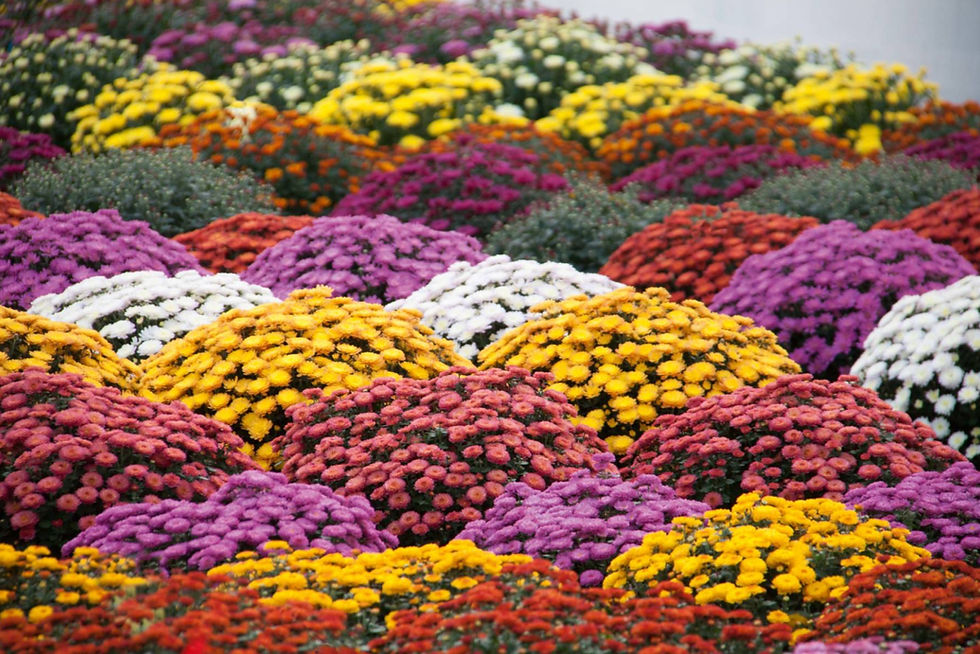
There are many varieties, classified according to the type of flower head (flower), flower colour, flower size, flowering season, commercial use, and finally their response to the photoperiod.
Let’s take a look at some of the different flower head shapes.

The flower colour can be white, cream, yellow, pink, salmon, red, purple, as well as many other colours. Depending on the variety, flower size can be classified as large, with a diameter of more than 10 cm; medium, 5–10 cm; or small, less than 5 cm.
A suitable fertiliser for chrysanthemums is 11-15-15 or 20-20-20, usually applied in dry form approximately every two weeks, alternating with potassium nitrate.
Chrysanthemum Pinching
Why do we pinch chrysanthemums?
To increase the number of flowering stems on the plant.
To help determine the flowering period.
When is the right time to pinch chrysanthemums?
Pinching is carried out after planting, once the plant begins to develop new leaves. More specifically:
When planting takes place in December–January, pinching is carried out 4 weeks after planting.
When planting takes place from February–April or from 15 August–November, pinching is carried out 3 weeks after planting.
When planting takes place from May–15 August, pinching is carried out 2 weeks after planting.
What types of pinching are there and what are the selection criteria?
There are three types of pinching:
Light pinching (1–2.5 cm): Encourages the rapid development of many lateral shoots.
Hard pinching (>2.5 cm): Recommended only for stressed plants, as it significantly reduces the leaf area and delays the development of new shoots.
Very light pinching (<1 cm): Also known as soft pinching. No leaves are removed, but there is a risk of uneven growth.
Nutrient Deficiencies
N & S deficiency: When chrysanthemums lack nitrogen and sulphur, symptoms usually include small leaves, yellowing of the lower leaves, woody stems and red spots on the undersides of the leaves.
P deficiency: Greyish foliage, reduced or halted shoot growth and small leaves.
K deficiency: Chlorosis around the margins of the lower leaves, which may eventually develop into necrosis affecting the entire leaf.
Physiological Disorders
Stunted growth: This may be caused by viral infections, excessive or insufficient fertilisation, poor drainage or nematodes.
Blind shoots: Vigorous or otherwise normal vegetative growth without the formation of an inflorescence. This may be caused by hard pinching, low temperatures or insect infestations.
Chlorosis: Chlorosis may occur as a result of excessive fertilisation, poor root aeration or high concentrations of soluble salts.
Burns: These can occur due to high summer temperatures. For this reason, shading is recommended once flower colour begins to appear. The symptoms may resemble Botrytis infection; however, Botrytis usually affects the tips of older petals, whereas heat damage generally appears on younger petals.
Cyclamen
Cyclamen grows naturally in regions including Greece, Palestine and Asia Minor. Approximately 24 species of cyclamen have been described. In general, the plant enters a dormant period during the summer and begins growing again with the first rains and the drop in temperature.
Through hybridisation, varieties have been developed with larger flowers, more intense colours, double flowers, fragrance, as well as miniature varieties.

The fertiliser required for cyclamen is 20-20-20 or 20-10-20, applied every three weeks. It is important to note that potassium (K) deficiency can make the plant more susceptible to pathogens, as can poor aeration.
Flower buds appear in the axils of the 6th–7th leaf, while flowering is usually observed when the plant has developed approximately 35 leaves. Each flower can last for about one month, provided that the plant is properly cared for, with watering approximately twice a week and placement in a bright location.
Caution! Watering should not be neglected. If the cyclamen wilts due to lack of water, its leaves may turn yellow within 24–36 hours.
And a little secret…
Cut cyclamen flowers from long-stemmed varieties can be preserved for up to two weeks if they are cut very low, close to the tuber, and then placed in water containing 5% sugar + 25 ppm Ag(NO₃)₂.
Of the 24 cyclamen species that exist, we will present five of the best-known species in Greece.

Pests and Diseases
Cyclamen can be affected by mites (causing curling, discolouration and hardening of leaves and flowers), aphids(causing wrinkling and deformation), thrips (causing white, silvery and brown spots), fungus gnats (which attack the root system), Botrytis (crown rot), vascular wilt diseases (causing wilting and chlorosis), root rots, and viral diseases.
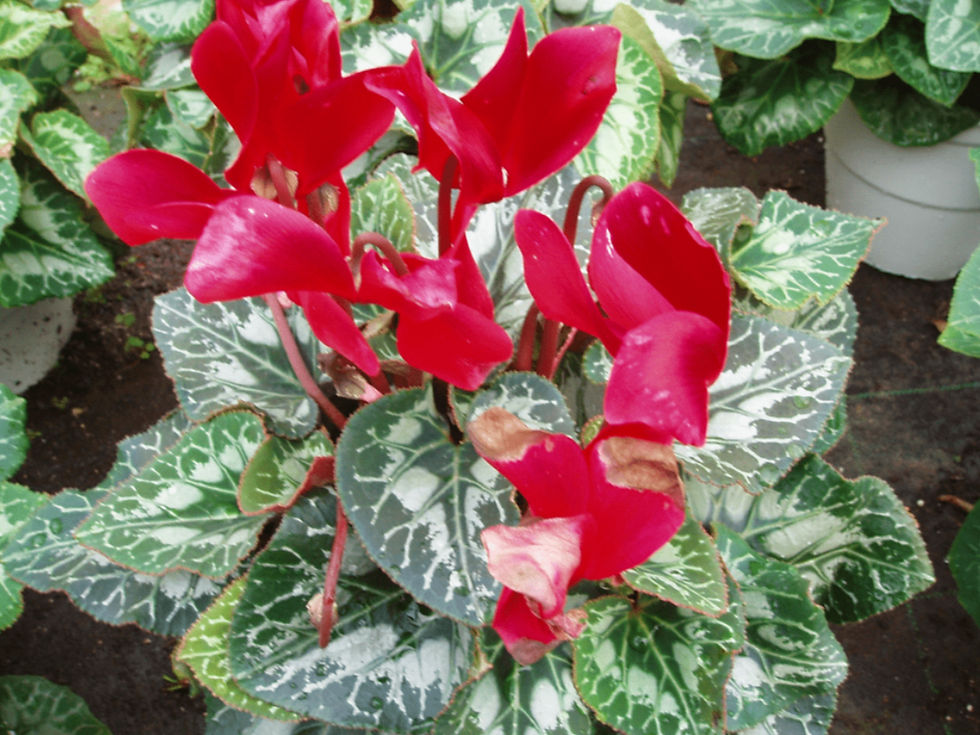
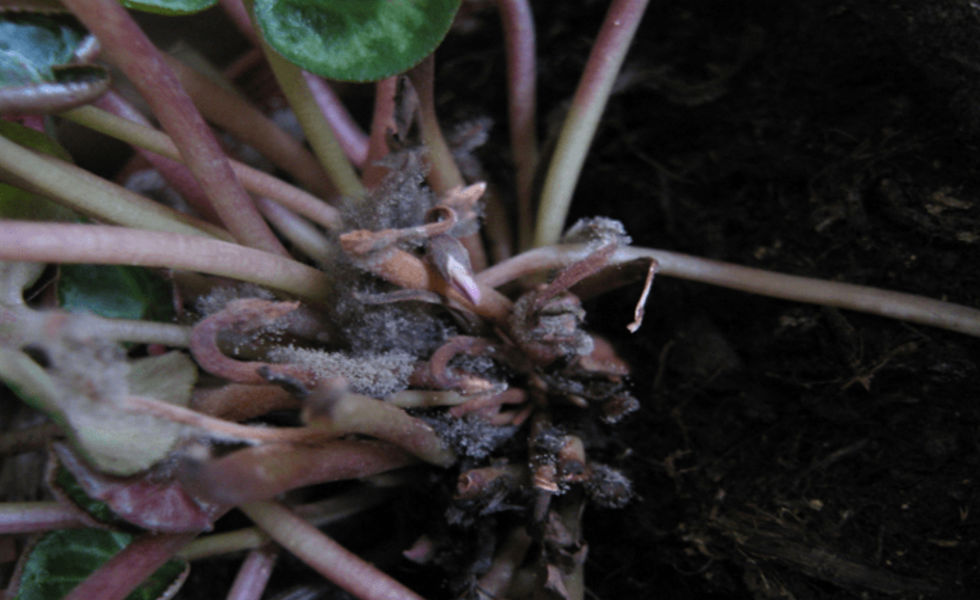
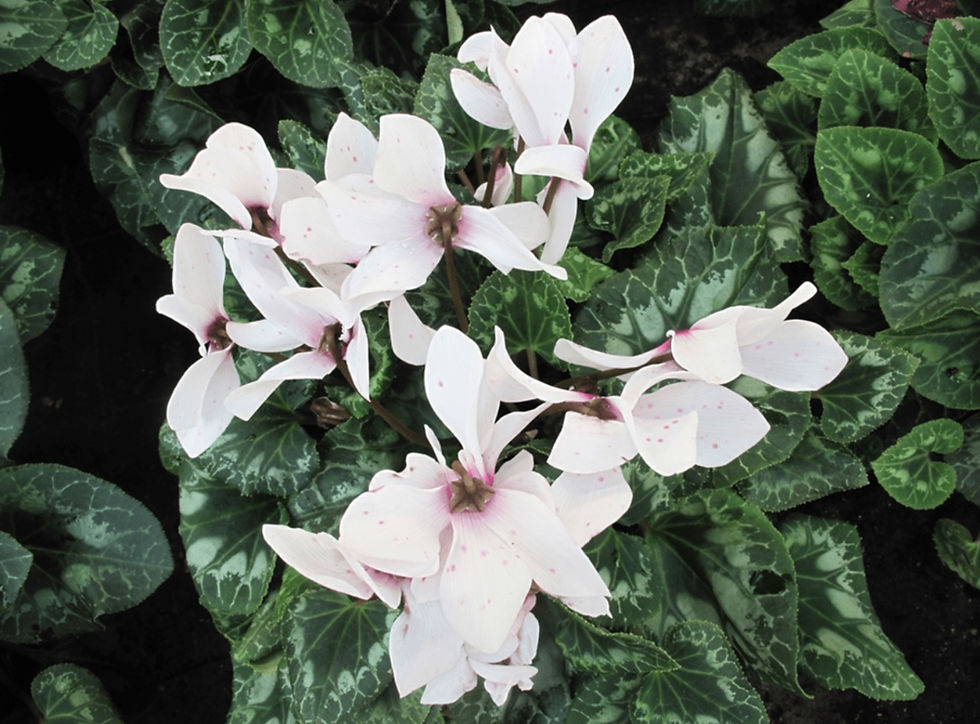
The most common pathogen affecting cyclamen and requiring particular attention is Botrytis. It is usually found in plants growing under conditions of poor air circulation. Symptoms generally appear around the crown, lower leaves and flower stalks. Below, you can find photographs showing typical Botrytis symptoms on cyclamen.
Symptoms on the Flower
Symptoms on the Plant Crown
Characteristic Leaf Spots
To protect plants from Botrytis, the application of copper sulphate, also known as blue vitriol, is recommended as a soil drench, at a ratio of 1 teaspoon per 2 litres of water. Caution is required, as copper sulphate can be phytotoxic; therefore, spraying the plant with this form of copper should be avoided.
Article Sources
Notes from the Agricultural University of Athens
Author
Emmanouil Zaraidonis (PhD Candidate, Agricultural University of Athens)


Comments